 Skip to content

A student calls the day before a job starts and asks whether their BLS card is still valid. A corporate client sends over a roster with certificates from three different organizations. An instructor finds a completed skills check with no card issued. These are not minor administrative details. They directly affect eligibility, client confidence, and the credibility of your training operation.
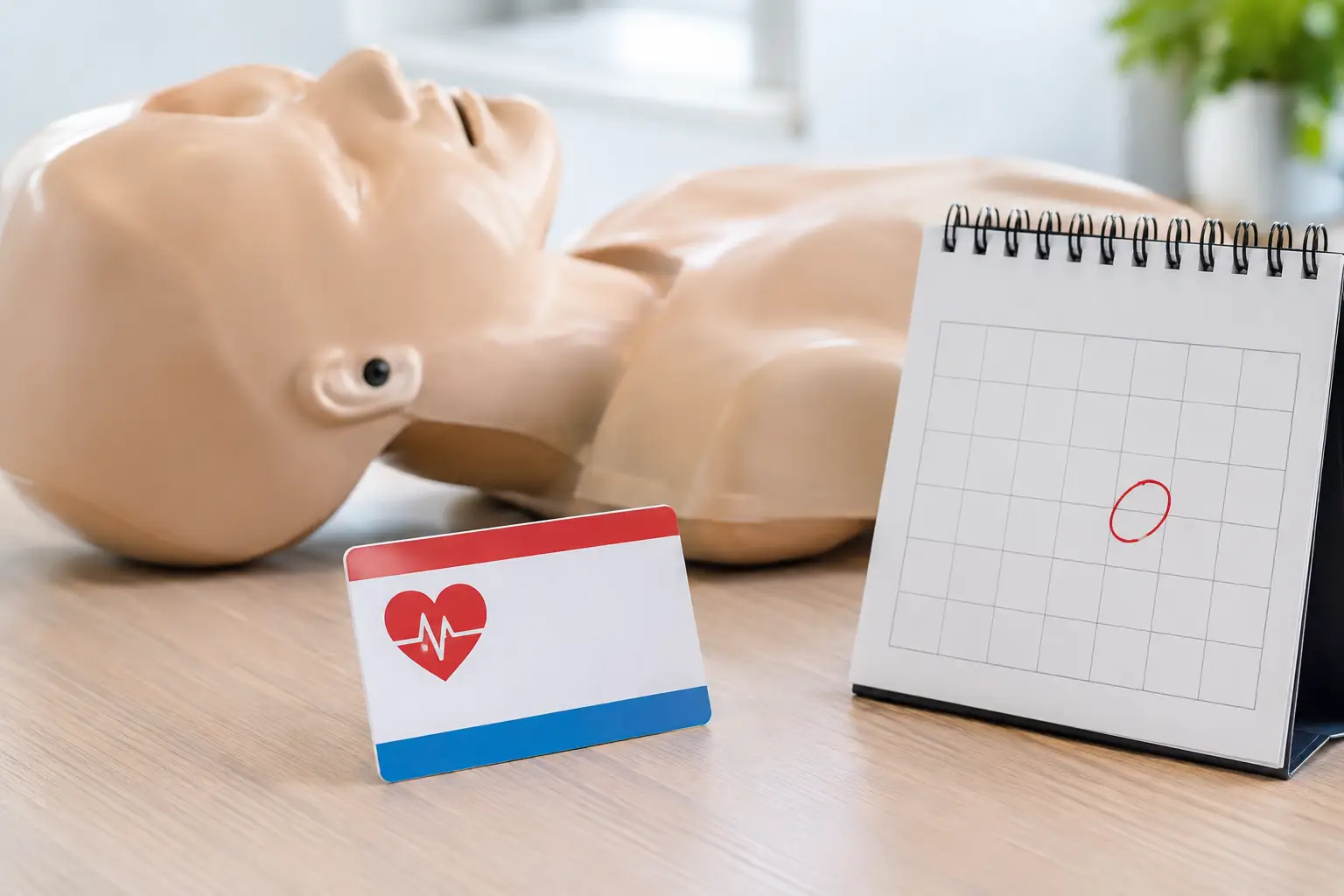
So, when do training cards expire? For many CPR, First Aid, and advanced healthcare courses, cards are valid for two years from the completion date. But the correct operational answer is more specific: expiration depends on the issuing organization, the course type, the card date, and sometimes an employer, state, or facility policy.
For training providers, the objective is not simply telling students to renew every two years. It is building a reliable process that records the correct expiration date, communicates it clearly, and makes renewal easy before a lapse creates a problem.
When Do Training Cards Expire? Start With the Issuer
A training card is only valid according to the standards of the organization that issued it. That is why a card’s expiration should never be calculated from a generic rule alone. Review the issuing organization, course name, completion date, and printed expiration date before confirming a student’s status.
Many nationally recognized CPR and healthcare credentials follow a two-year cycle. This commonly includes CPR/AED, First Aid, Basic Life Support (BLS), Advanced Cardiovascular Life Support (ACLS), and Pediatric Advanced Life Support (PALS). A course completed on May 15, 2026, may therefore remain valid through May 15, 2028, depending on the issuer’s card policy.
The card itself is the controlling document. Some issuers display a clear expiration date, while others show an issue date and define the validity period in their program rules. Digital cards can also have verification details that should be retained in the student’s record.
A two-year interval is common, not universal. Specialty programs, workplace credentials, instructor authorizations, state-required courses, and employer-specific training may follow a different schedule. A hospital can require BLS renewal before the printed card expiration date. A corporate client may require annual skills verification alongside a current CPR certification. Your office should treat the client’s requirement as a separate compliance deadline, not as a replacement for the card’s expiration date.
Typical Expiration Periods for CPR and Healthcare Cards
The following timelines are common across major training organizations, but training centers should always verify the current requirements of the program they teach.
CPR, AED, and First Aid
Adult CPR, pediatric CPR, AED, and First Aid cards are frequently valid for two years. This applies to many community, workplace, childcare, and occupational safety students. However, a student who needs certification for a regulated role may also have employer or licensing requirements that determine which course format and issuer are acceptable.
For example, a daycare employee may need pediatric CPR and First Aid, while a construction client may require adult CPR/AED and First Aid. Both credentials may have the same two-year expiration cycle, but the course content, accepted provider, and renewal documentation can differ.
BLS
BLS cards are commonly valid for two years. Healthcare employers often scrutinize BLS cards more closely than general CPR cards because the course is intended for healthcare professionals and includes a different skill standard.
A critical operational mistake is assuming any CPR card satisfies a BLS requirement. A student may hold a current general CPR/AED card and still be out of compliance if their role requires an accepted BLS credential. Your registration workflow should capture the student’s required course, not just whether they need “CPR.”
ACLS and PALS
ACLS and PALS cards also commonly expire after two years. These advanced courses often require a current BLS credential as a prerequisite, which creates a second deadline to track.
A student can have a current ACLS card while their BLS card is close to expiration or already expired. Depending on employer policy and the certifying organization, that may create a compliance issue. Training providers should track each credential independently rather than assigning one general expiration date to the learner’s entire record.
Why Expiration Dates Create Administrative Risk
Expired cards are often discovered at the least convenient time: before a shift, during an audit, before a clinical placement, or when a client asks for employee records. The issue is rarely that a training provider does not know the general renewal period. The problem is fragmented recordkeeping.
Spreadsheets, paper rosters, email folders, and separate payment tools make it easy to lose the connection between a completed class and its future renewal date. The more instructors, course types, locations, and corporate accounts you manage, the greater the chance of missed follow-up.
There is also a distinction between a student who is due for renewal and a student whose card has already expired. A renewal reminder sent 30 days before expiration gives the student options. A reminder sent after expiration can mean a lapse in employment eligibility, a rushed class request, or lost revenue if the learner goes elsewhere.
For corporate clients, incomplete tracking can affect contract retention. Safety managers expect training providers to produce organized rosters, card records, and status reports. If your team cannot quickly identify which employees are current, expiring, or overdue, the client has to absorb that administrative burden.
Build a Renewal Process Around the Actual Card Date
The most effective renewal process begins at course completion, not 23 months later. Once a learner completes a class and receives a card, their record should include the course name, issuer, completion date, expiration date, instructor, and card or credential identifier when applicable.
Avoid entering only a completion date and assuming someone will calculate the expiration later. Store the expiration date as its own field. That makes it possible to segment students by status, produce client reports, and trigger targeted reminders without manually reviewing every roster.
A practical reminder schedule generally includes an early notice, a closer deadline reminder, and a final message shortly before expiration. The exact timing depends on your audience. Healthcare professionals with rotating schedules may need more lead time, while public community classes may respond best to a simple reminder tied to upcoming class availability.
Your reminder should do more than state that a card is expiring. Identify the credential, list the expiration date, explain the appropriate renewal course, and make the next step clear. If the student needs BLS renewal, do not send a generic message about “CPR training.” Precision reduces registration errors and support calls.
Account for course format and prerequisites
Renewal logistics matter. Some students may need an instructor-led class, while others may be eligible for a blended learning pathway with an online portion and in-person skills session. Advanced students may need to confirm that their BLS credential is current before attending ACLS or PALS.
This is where standardized course setup protects your operation. Registration questions, prerequisite checks, confirmation emails, skills-check scheduling, and roster workflows should reflect the requirements of the specific program. A renewal system is only useful if students are directed into the right class format.
Separate Certification Validity From Employer Policy
A card can be valid and still fail to meet a job requirement. Employers may specify an accepted training organization, require an in-person skills component, set an earlier renewal deadline, or mandate additional training. State boards, licensing agencies, school districts, and healthcare facilities can add their own conditions as well.
When clients ask whether a card is current, answer the certification question first: what does the card issuer state? Then address the acceptance question: does the employer or regulator accept that card for the intended role? These are related, but they are not interchangeable.
Training providers should avoid guaranteeing employer acceptance without reviewing the employer’s written policy. Instead, collect requirements during enrollment or corporate account setup. That protects students from purchasing the wrong course and helps your staff recommend the correct training path.
Make Card Tracking Part of Class Operations
Expiration management works best when it is integrated with enrollment, payment, rosters, certification records, and client communication. A system such as CPR Enroll can centralize those records so training businesses can automate renewal reminders, maintain accessible documentation, and monitor certifications across individual and corporate learners.
For multi-instructor operations, consistency is especially valuable. Every instructor should use the same completion process, card-recording standard, and document workflow. Otherwise, renewal tracking becomes dependent on who taught the class rather than a repeatable business process.
The useful question is not only, “When does this card expire?” It is, “Can our team identify the answer in seconds, notify the student before it matters, and enroll them in the correct renewal class?” When that process is organized, expiration dates become a predictable part of client service rather than a last-minute administrative failure.
