 Skip to content

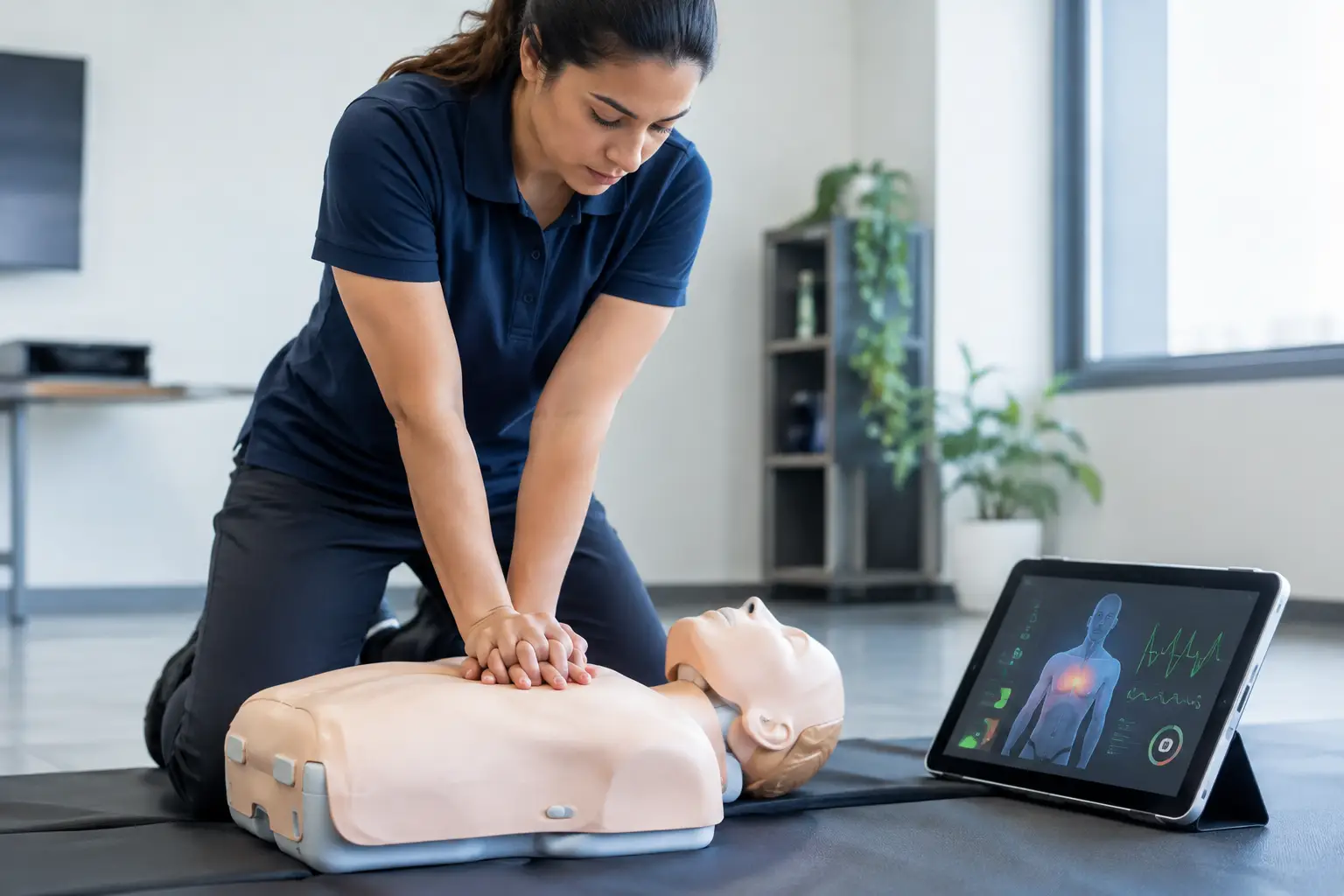
A student completes a blended-learning module at 9:00 p.m., books a skills check from a mobile phone, and expects a certificate record to be available without follow-up emails. A corporate client wants renewal status for 75 employees before the next compliance deadline. An instructor needs an accurate roster before leaving for an off-site class. The future of CPR training software will be defined by how well a system handles these operational moments without creating more administrative work.
For CPR, BLS, ACLS, PALS, AED, First Aid, and healthcare training providers, software is no longer just a calendar with online payments. It is becoming the operating system for enrollment, class delivery, certification management, client communication, and long-term records. The providers that grow efficiently will not be the ones with the most apps. They will be the ones with a connected workflow built for the way certification training actually works.
Why the Future of CPR Training Software Is Operational
Training businesses have traditionally assembled their processes from separate tools: a booking app for registration, a payment processor for transactions, spreadsheets for rosters, folders for documents, and manual emails for renewal reminders. That approach can work when an instructor teaches a handful of classes each month. It becomes harder to manage when the business adds instructors, class locations, corporate accounts, blended-learning options, or recurring certification clients.
The cost is not merely inconvenience. Fragmented systems create duplicate data entry, inconsistent student records, delayed paperwork, and uncertainty around who is responsible for the next step. A staff member may have payment information but not certification details. An instructor may see a class roster but not the student’s online course completion status. A corporate coordinator may need a report that requires someone to combine data from three systems.
Future-ready software will reduce those handoffs. Scheduling, enrollment, payment collection, digital documents, instructor assignments, certification tracking, and reporting need to work from the same source of truth. This is especially important in CPR training, where the transaction does not end when a student reserves a seat. Providers must manage eligibility, attendance, skills checks, completion records, certificates, and future renewals.
Automation Will Move Beyond Appointment Reminders
Automated class reminders have become standard. They are useful, but they address only one small part of a training provider’s workload. The next generation of CPR training platforms will automate workflow decisions based on class type, student status, and client requirements.
For example, a blended-learning student may need different instructions than a student attending a fully instructor-led course. The system should identify the class format, send the correct pre-class requirements, track whether the online portion has been completed, and alert the instructor when a student is not ready for a skills session. That is more valuable than simply sending everyone the same confirmation email.
Automation will also become more conditional. A student who has not signed a required document may receive a targeted reminder. A client account with expiring certifications may receive a renewal notice tied to available group classes. An instructor may receive a notification when a roster changes, when a payment issue needs attention, or when a document is incomplete.
The goal is not to automate every communication. Training providers still need judgment, particularly with corporate accounts, special accommodations, and complex certification questions. The better model is to automate predictable administrative steps so staff can focus on exceptions, client relationships, and instructional quality.
Certification Data Will Become a Business Asset
Certification tracking is often treated as a recordkeeping task. In practice, it is one of the strongest drivers of repeat business for a CPR training company. Every certification record contains a future service opportunity: an individual renewal, a workforce recertification cycle, a new department, or a client account that needs better visibility.
The future of CPR training software will place more emphasis on clean, searchable, durable training records. Providers will need to see who was trained, which course they completed, when the credential expires, which instructor delivered the class, and which organization paid for it. They will also need records that remain accessible after staff changes, instructor turnover, or a client request months later.
For corporate training, reporting needs will become more specific. Employers may want a current list of certified employees, an upcoming expiration report, course histories by location, or documentation for an audit. Generic scheduling tools are not designed for this level of lifecycle management. Purpose-built training software is.
There is a trade-off here. Collecting more data only helps when the data is standardized and easy to maintain. Providers should avoid adding fields merely because software allows them. The right system captures the information required for compliance, client service, and renewal management without turning class setup into a data-entry project.
Client Portals Will Change Corporate Training Coordination
Corporate clients increasingly expect visibility without having to email a training provider for every roster update or certificate request. That does not mean every client needs a complex enterprise portal. A small business may only need invoices, employee records, and renewal status. A multi-location healthcare organization may require more detailed reporting and controlled access for several administrators.
Future platforms will make this information available in a structured, permission-based way. Client contacts should be able to manage the parts of the training relationship that belong to them while providers retain control over classes, certifications, documents, and business rules.
This shift matters because corporate coordination can consume disproportionate administrative time. Sending spreadsheets back and forth, confirming employee lists manually, and responding to repeated certificate requests do not improve instruction. Organized portals and account-level records give clients a more professional experience while reducing preventable support work.
Mobile Workflows Will Matter More Than Mobile Apps
CPR instructors do not operate from a desk all day. They teach at training centers, client facilities, schools, community sites, and healthcare workplaces. Their software must support the reality of checking a roster between classes, confirming attendance on-site, locating student information, and completing paperwork without returning to the office.
The practical requirement is not necessarily a separate app for every task. It is a dependable mobile workflow that makes the critical information usable on a phone or tablet. If instructors cannot quickly confirm enrollment details, check course prerequisites, or access the appropriate class documents in the field, the platform has not solved the real operational problem.
Mobile access must also be balanced with control. Not every instructor needs access to financial reports, client-wide records, or administrative settings. Role-based permissions will become more important as training companies add staff and work with contractors. The system should give each person what they need to do their job without exposing information they do not need.
AI Will Help With Administration, Not Replace Instruction
Artificial intelligence will influence training software, but its most useful role will be administrative support. It may help providers draft class communications, identify incomplete enrollment steps, organize document requests, flag duplicate records, or surface renewal opportunities from historical data.
It can also improve reporting. Rather than building a report manually, an administrator may ask for all employees at a specific client location whose certifications expire within 90 days. The software can make that information easier to retrieve, but the provider still needs to confirm the result and decide how to act on it.
There are clear limits. AI should not make unsupported claims about certification requirements, determine clinical competency, or replace instructor judgment during skills evaluation. CPR and healthcare education involve standards, documentation, and real-life safety outcomes. Training providers should favor systems that use automation responsibly and preserve a clear record of what was completed, by whom, and when.
What Training Providers Should Prioritize Now
The best preparation for the future is not chasing every new feature. It is replacing disconnected processes that already slow the business down. Start by mapping the student lifecycle from class discovery through enrollment, payment, course completion, certification delivery, and renewal. Each manual handoff is a place where delays, errors, or missed revenue can occur.
Then evaluate whether your software supports the class formats and client relationships you actually manage. A provider offering public CPR classes has different needs than a training company coordinating recurring BLS programs for medical offices. A growing business with multiple instructors needs stronger permissions, instructor management, and reporting than an independent instructor teaching a few monthly sessions.
CPR Enroll is built around this operational reality: training businesses need one organized system for classes, enrollment, payments, rosters, documents, certifications, instructors, and client records. The value is not a longer feature list. It is fewer disconnected steps between a student registering and a provider maintaining a complete, usable training record.
The providers that earn lasting client trust will make training easier to schedule, easier to document, and easier to renew. Build your operations around that standard now, and growth will feel more controlled when the next class, client, or instructor is added.
